

Question 5: Examining the possibilities and feasibility
How can you make sharing financially viable in the long term, and have you really explored all the options?
Why this question matters
For most people, this is the question everything comes down to. Yet it's important not to make assumptions about what is affordable.
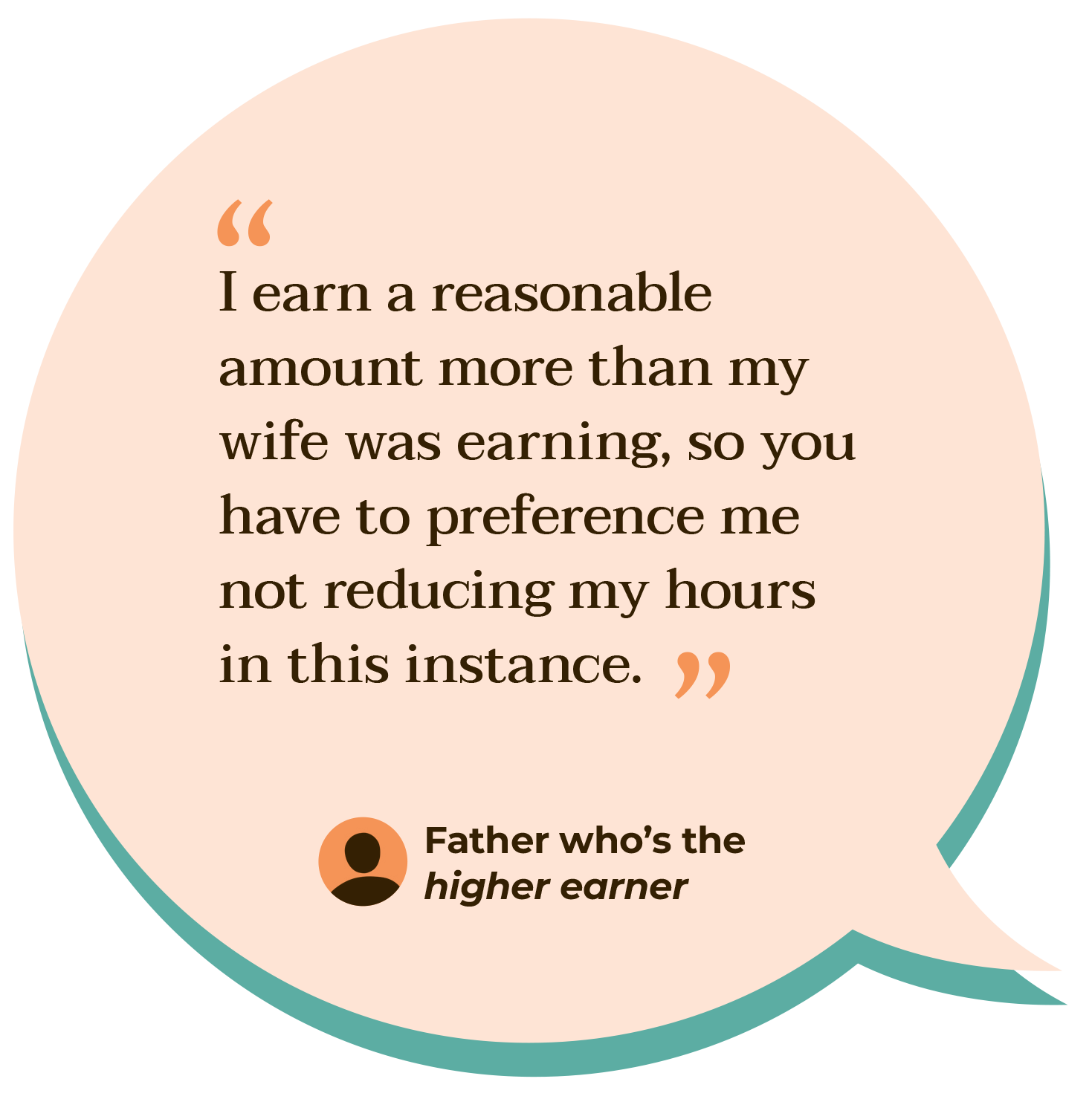
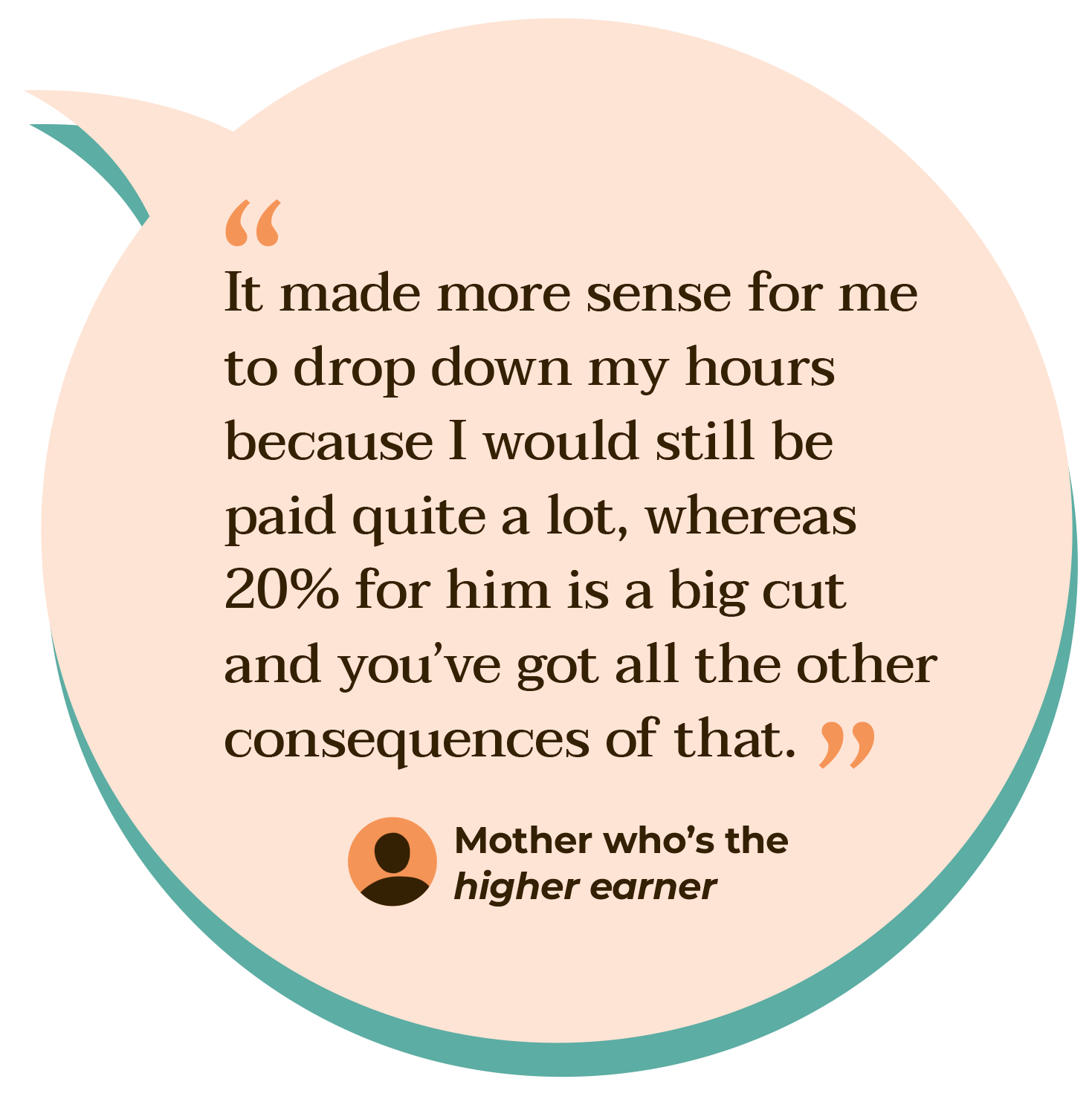
What 'makes financial sense' is not always as straightforward as it seems. There are genuine financial barriers to sharing equally. However, when deciding what to prioritise, it’s tempting to focus on short-term costs and familiar justifications. This can make it easy to overlook the long-term financial consequences of early parenting decisions.
Do your research before ruling anything out. Weigh up and fully calculate all the alternatives. Which approach will best support your family's long-term goals, earning potential, and quality of life?
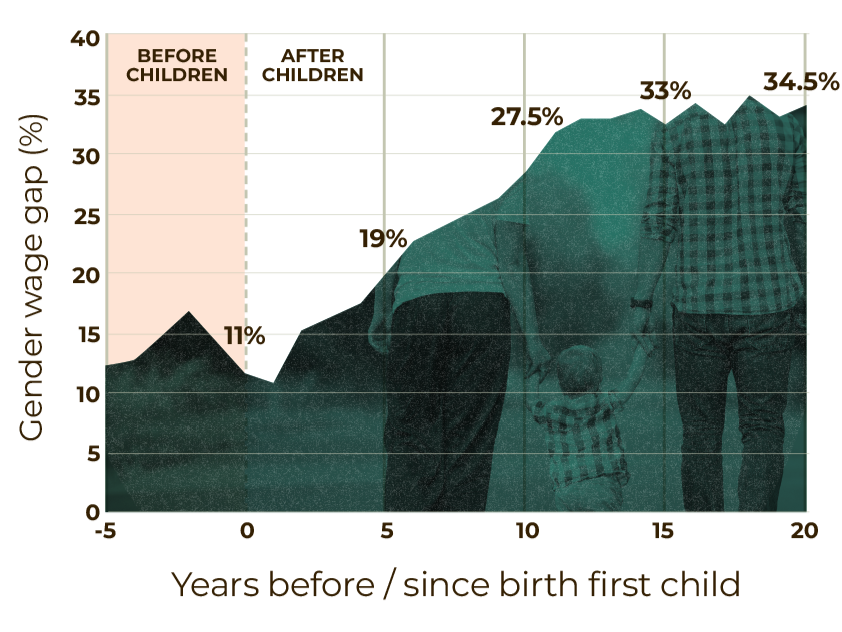
The gender wage gap increases dramatically after parenthood
Source: Costa Dias, M., Joyce, R., & Parodi, F. 2018. The gender pay gap in the UK: children and experience in work. Institute for Fiscal Studies, London.
How to approach this question:
“How can you make sharing financially viable in the long term, and have you really explored all the options?”
-
Policies can be complicated and it’s important not to make assumptions about what you’re entitled to. Speak to your HR team, if you have one, and explore our useful resources page for further support.
-
Are there financial steps you could take now to make sharing more workable in the future? This is particularly relevant if you are still considering parenthood. For example, people often save for longer maternity leaves, but may not think about setting aside money for more equal arrangements.
-
Different standards often shape how we view women’s and men’s earnings, career prospects, and financial independence. We also tend to compare with others of the same gender when considering what is normal, acceptable and fair. Would your reasoning change if you were thinking about someone of a different gender?
Congratulations, you've completed The Equaliser!


You’ve explored questions that many people never ask, giving yourselves a stronger foundation for sharing parenting more equally.
Keep the conversation going. Equal parenting isn’t a one-off achievement but something you build together over time. Revisit these questions regularly and make space to reflect on what's working and what might need to change.

We’d love to hear how you got on
Your experiences will help us improve The Equaliser and support future research into equal parenting.